
Matrix
Encryption™
The Matrix Encryption™ is a newly patented technology available for licensing. Cybersecurity is getting harder to ignore because so much of modern digital life still depends on centralized platforms, account-based access, and trust in third parties. At the same time, the industry is staring down the growing challenge of quantum computing, which is expected to put pressure on many traditional public-key systems and accelerate the need for new approaches to secure communication, data storage, and identity. Against that backdrop, there is a strong market need for encryption that gives users more direct control, reduces dependency on custodians, and works in a way that is practical for real-world business use. Matrix Encryption™ is designed to speak directly to that need by shifting the center of trust back to the user.
Matrix Encryption™ is a patented symmetric-key encryption system built around discrete, number-based mathematical transformations, user-created key-sets, and a structure intended to increase combinatorial complexity and structural variability. In simple terms, it is designed to let users encrypt data with keys they control, while keeping those keys out of centralized hands. The system is also framed as post-quantum oriented, with a focus on resilience, scalability, and a transformation model that is not tied to traditional fixed-block cipher thinking. It supports both plaintext and files, and is capable of handling everything from documents and spreadsheets to PDFs, images, audio, and video.
Beyond the math, the product is built to be commercially usable, making it the perfect software edition to business, both small and large. It includes a compiled desktop interface, can be distributed at very low cost, and is intended to be lightweight enough to integrate into secure messaging, file encryption, enterprise protection, and other software layers. This product also offers the flexibility of a URL-based transfer workflow where encrypted data can be temporarily stored on the website, accessed by a separate code, and then decrypted offline, with keys never stored online. That combination of user control, offline handling, simple distribution, and low-cost scalability gives Matrix Encryption™ a clear story for investors: it is not just another security feature, but a platform for user-owned, source-based digital trust.
Special Features
Protects user privacy through user-created, user-controlled key-sets that eliminate reliance on centralized custodians
Positions itself for the future of cybersecurity with a post-quantum oriented cryptographic architecture designed to address emerging quantum computing threats
Enables local and offline encryption workflows so sensitive operations can occur directly on user-controlled devices instead of exclusively in the cloud
Separates encrypted data from cryptographic keys so keys are never stored online during the transfer process
Increases unpredictability and reduces pattern recognition by configuring for non-deterministic length and composition of encrypted outputs
Expands the possible transformation space through combinatorial, structure-based mathematical encoding rather than relying on a standard fixed-block cipher model
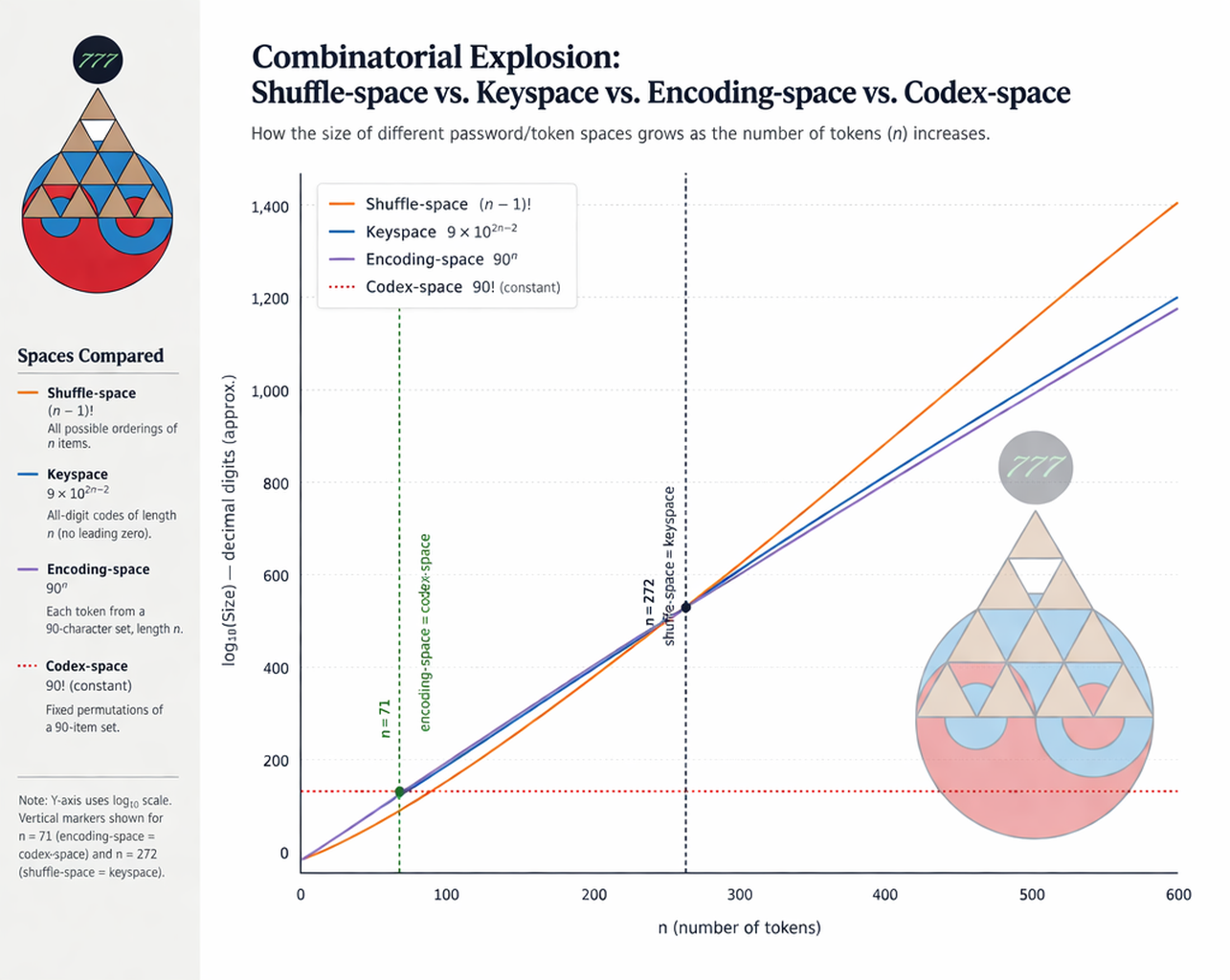
Enhances resistance against brute-force style attacks through orthogonal and statistically independent key-spaces
Allows users to securely transfer encrypted data through unique URLs and separate access codes without exposing plaintext information
Prevents unauthorized access attempts by permanently locking encrypted transfer URLs after repeated failed access-code submissions
Supports secure encryption of plaintext, documents, spreadsheets, PDFs, images, audio, and video using the same patented mathematical framework
Functions as a self-custody cryptographic layer that gives users direct ownership and control over their encrypted data
Operates as a lightweight and adaptable encryption engine suitable for integration into messaging systems, enterprise platforms, storage systems, and software security layers
Scales efficiently across small or large deployments while maintaining extremely low production and distribution costs
Enables low-cost mass deployment through compiled standalone desktop applications that can be repeatedly distributed at near-zero cost of goods
Supports flexible commercialization opportunities through multiple software versions, tiered product offerings, subscription services, and licensing models
Increases long-term scalability by using a modular architecture designed for future upgrades, layered implementations, and expanded cryptographic applications
Reduces dependency on centralized trust models by allowing encrypted data workflows where users retain possession and control of critical cryptographic materials
Designed for easy deployment across existing infrastructures without requiring organizations to completely replace their current systems or workflows
PRODUCT FEATURES & BENEFITS
PRODUCT DETAILS
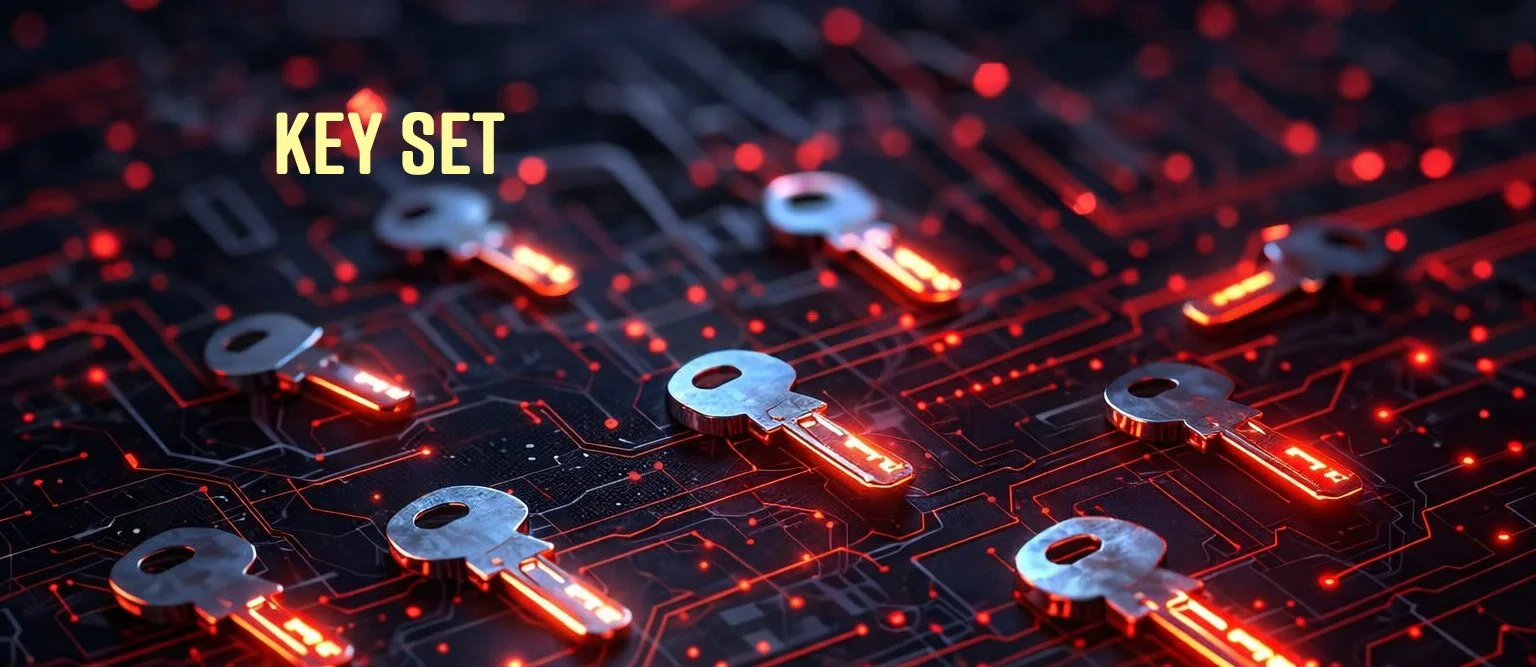
Matrix Encryption™ is a patented cryptographic technology built for a world where data security, user ownership, and long-term resilience matter more than ever. A working version of the product is available today as a downloadable desktop application, with the underlying framework architected for broader licensing and integration across existing technical infrastructures. As digital communication, file sharing, and online storage continue to expand, organizations and development teams are increasingly looking for tools that give them more direct control over sensitive information instead of forcing them to rely entirely on centralized platforms. Matrix Encryption™ answers that need with a number-based encryption framework designed to support stronger user control, flexible deployment, and a more understandable path to self-custody.
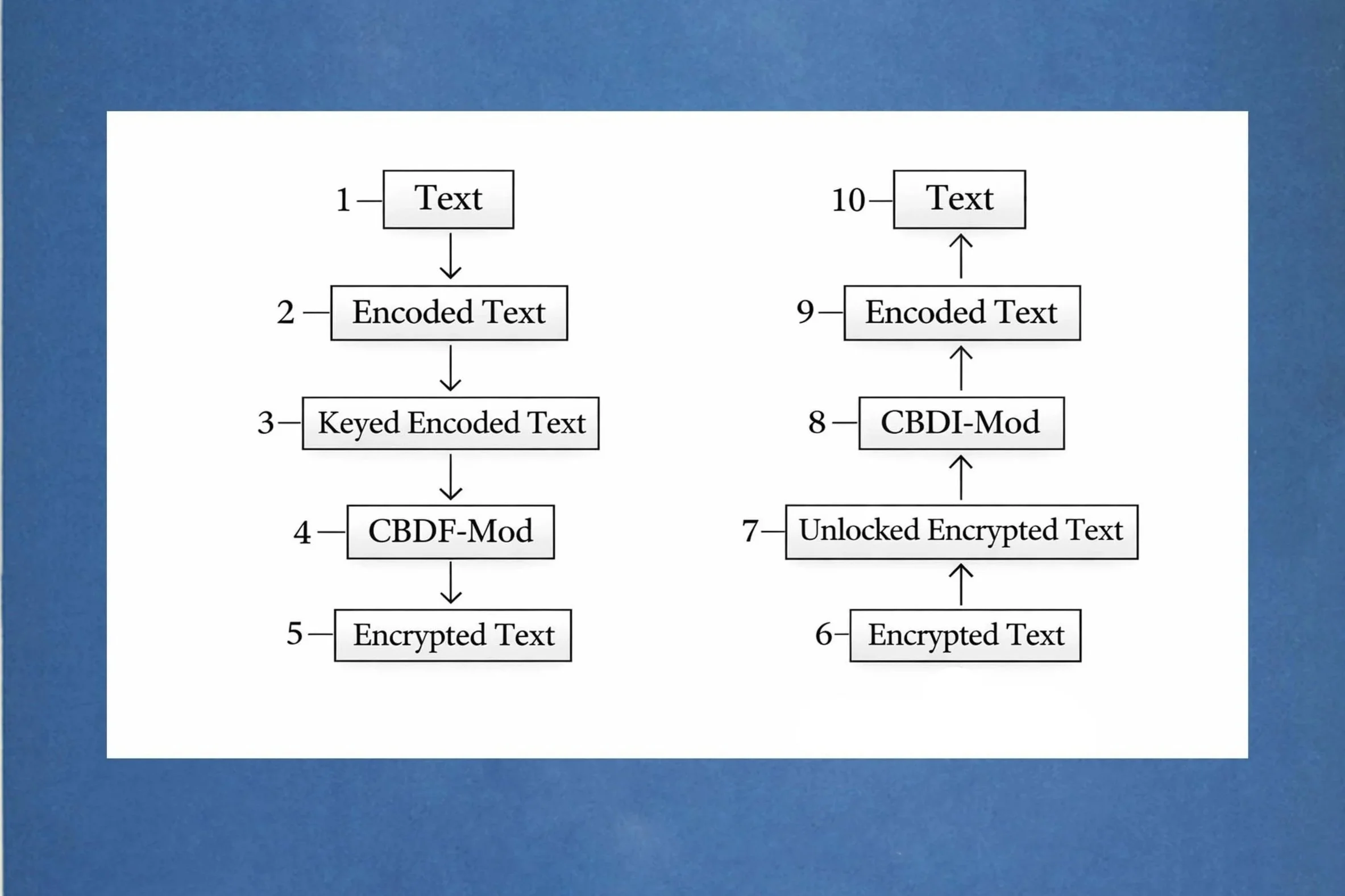
At the core of this product is a discrete function-based encryption structure built around the Modified Combinatorial Batch Decimation Function, or CBDF-Mod, and its asymmetric inverse, CBDI-Mod. Matrix Encryption™ is a patented encryption method that uses these paired mathematical functions. The supporting functions originally referenced in the patent have since been absorbed into their respective parent functions through algebraic substitution and simplification, resulting in a computationally lighter implementation. Together, these functions work to transform plaintext into numerically encrypted text. This system is designed around arbitrary block sizes that depend on the length of the text being encrypted, while also allowing for user-desired key lengths and a Master Key structure that eliminates the need for maintaining many keys of consecutive lengths, serving as a lightweight solution that generates exactly the key-set the algorithm requires for the data being processed. The result is a patented framework that is mathematically distinctive and intentionally structured for flexible security use.
Matrix Encryption™ is currently available as a downloadable desktop application, representing a fully functional implementation of the patented cryptographic framework and providing an immediately accessible entry point for evaluators, early adopters, and integration partners. The Matrix Encryption™ is currently available as a downloadable desktop application, representing a fully functional implementation of the patented cryptographic framework and providing an immediately accessible entry point for evaluators, early adopters, and integration partners. The underlying system is architected for broader deployment as a licensable cryptographic infrastructure layer across a range of existing technical environments. Integration pathways include URL-level secure transfer architectures, where encrypted payloads route through temporary server infrastructure without exposing plaintext to intermediaries. It also fits into API and service authentication layers, where user-origin encryption is applied prior to data transmission, as well as enterprise security architecture, where the platform augments existing identity, access management, and compliance frameworks without replacing them. Additional pathways include browser and client-side security stacks, where local key handling and offline encryption extend existing privacy tooling, and identity verification systems, where self-custodied key-sets anchor authenticated user identity independent of centralized credential stores.
Matrix Encryption™ is designed with several categories of technical buyer in mind, each of whom will find distinct and immediate relevance in the system's architecture. Enterprise security architects operating within zero-trust frameworks will find that the platform adds cryptographic trust beneath existing identity and security stacks, providing origin-level verification that complements rather than displaces current infrastructure investments. Infrastructure and cloud security teams focused on service-to-service trust, API verification, and edge encryption will find that the system can augment cloud-native security architectures and harden token and session authentication at the origin layer. Identity and authentication vendors, including those building within Okta-class ecosystems, decentralized identity frameworks, or wallet-based identity stacks, will find relevant application in the platform's self-custodied key model and its approach to credential trust and session integrity. Browser and web protocol stakeholders will find relevance in the URL-level implementation pathway, which speaks directly to origin cryptographic assertion, spoof resistance, phishing reduction, and domain-level trust verification. Finally, regulated financial and digital asset infrastructure teams will find that the system's cryptographic provenance model and secure origin verification capabilities address core concerns around transaction trust and fraud reduction. In each case, this product is positioned not as a replacement for existing solutions, but as a foundational layer that strengthens the trust model underlying them.
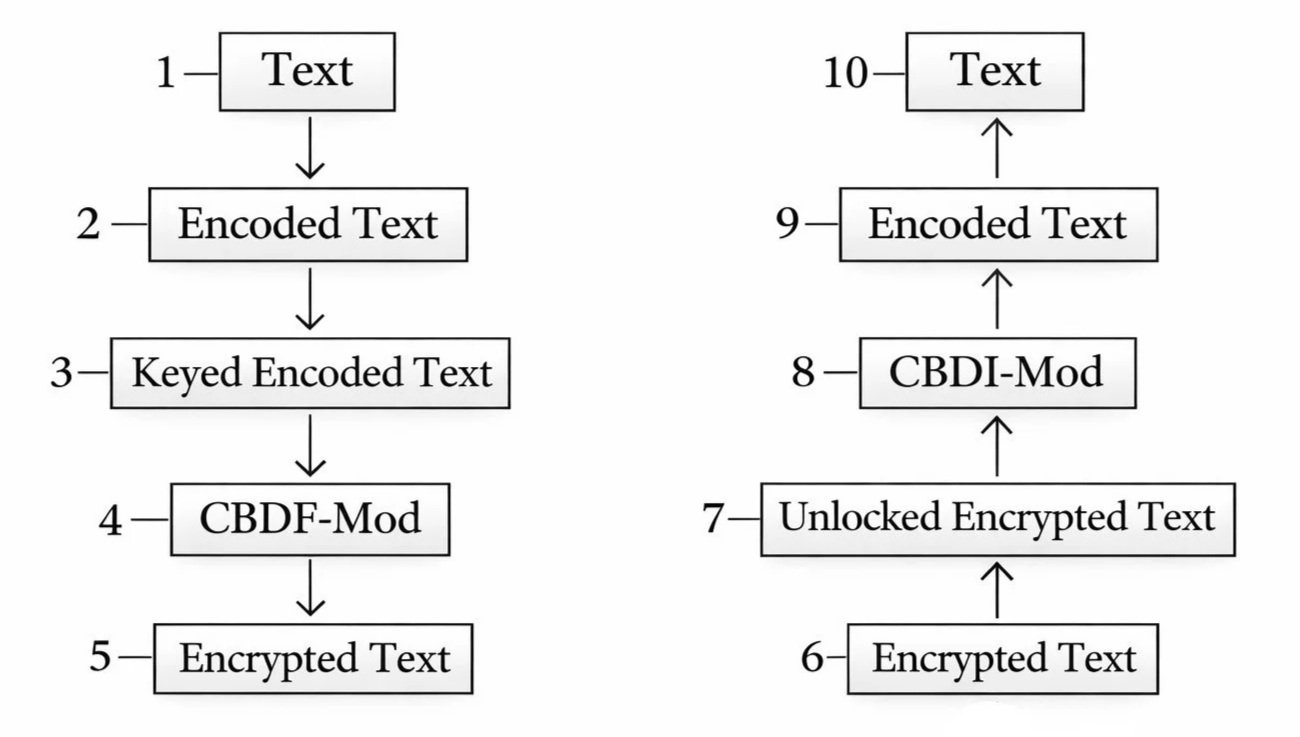
One of the product’s most important features is that it is built around user custody rather than third-party custody. This product is a self-custody cryptographic layer, meaning the user keeps control of the encryption process and the associated key material instead of handing that control off to a centralized platform. This product also has post-quantum potential, which gives it an important future-facing narrative in a market that is increasingly focused on long-term cryptographic durability. This positioning matters because this means it is designed to stay relevant as security expectations evolve.
Matrix Encryption™ is also notable amongst its competition, because it is not limited to one narrow use case, such as a simple text-based encryption. Instead, this product is designed to secure a wide range of digital content, including documents, spreadsheets, PDFs, images, audio, and video, allowing the same patented mathematical framework to protect virtually every major category of modern digital data. This broad applicability gives this product a much larger commercial surface area, since the same core mathematical framework can potentially support multiple product versions and different customer types. It also makes it easier to position as a general-purpose security engine rather than a one-off tool for a single kind of data.
Finally, this product is designed with deployment and commercialization in mind. It has very low production cost, since it can be compiled into an executable and distributed repeatedly with a near-zero cost of goods. This low-cost structure creates room for licensing, tiered versions, and broader market adoption without requiring a heavy manufacturing or inventory burden. In other words, Matrix Encryption™ is not just a patented idea with technical depth. It is a product architecture that was built to be packaged, distributed, and scaled in a commercially practical way
Materials needed to produce the Matrix Encryption™
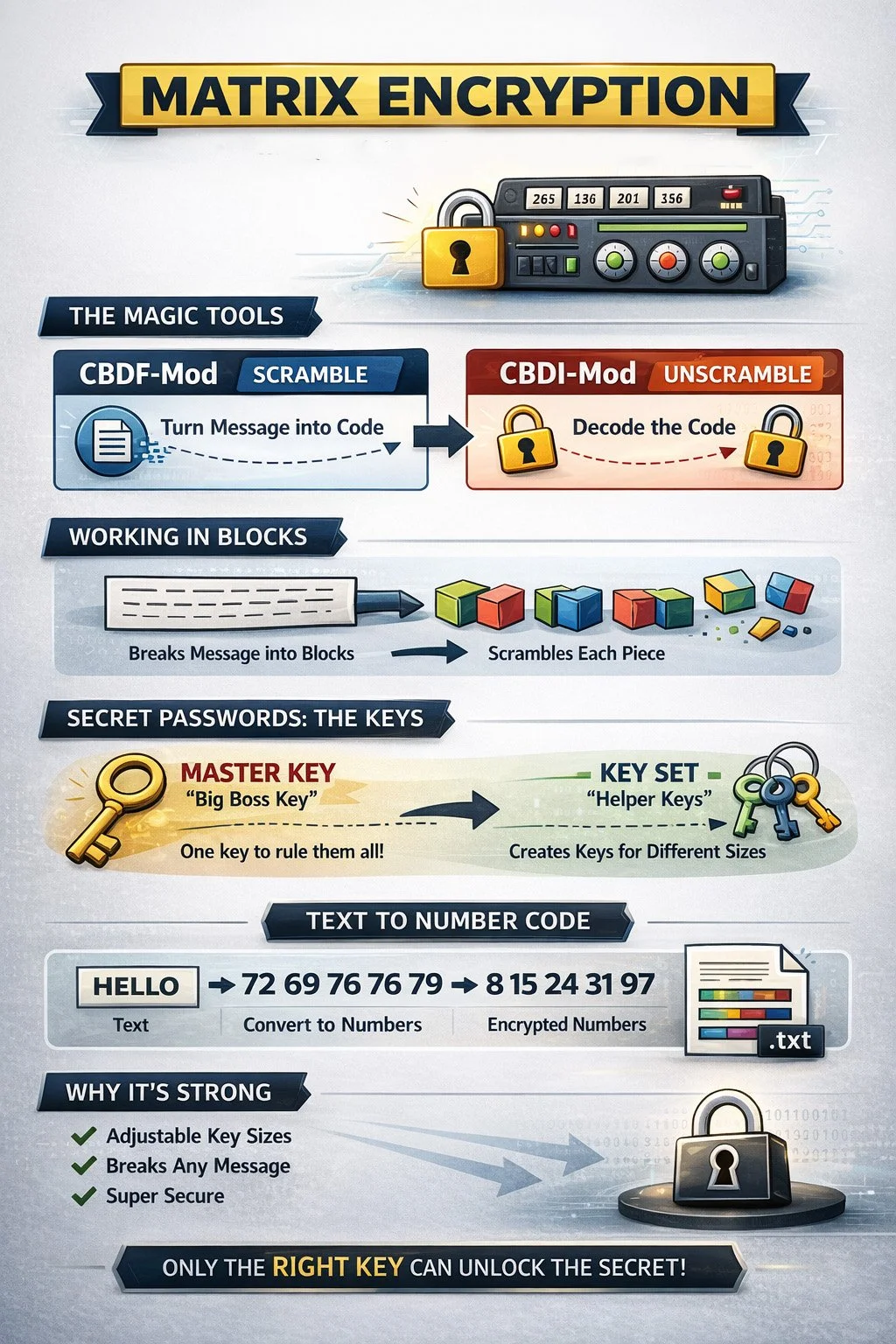
Matrix Encryption™ is intended to be a foundational cryptographic layer with application across multiple industries where data sensitivity, origin, chain-of-custody, and user-controlled security are mission-critical. Relevant sectors include government and defense communications, healthcare records protection, financial and banking transaction trust, legal and compliance documentation, educational credential security, cloud and SaaS infrastructure, IoT and edge-device authentication, media and communications transfer systems, supply chain provenance environments, and enterprise IT security architecture. Because the platform operates at the point of data origin rather than within a single application category, its architecture is adaptable across diverse technical and regulatory environments, with potential integration pathways into compliant architectures.
From a user perspective, this product is designed to be practical rather than a complicated, abstract concept where they need to be an expert to use it. A user can operate Matrix Encryption™ through a compiled desktop interface, create or generate the needed key-set, and then encrypt data locally before writing the encrypted output to a text file. This product has local storage, automatic key-set creation, and interactive user controls as part of its core experience, which makes it usable without requiring the user to understand the underlying mathematics in depth. This approach gives the user a more hands-on and self-directed encryption workflow, while keeping the technical power of the system behind the scenes.
A computer or compatible desktop device
Internet connection
Compiled executable version of Matrix Encryption™ software
Product key and internal expiration-date licensing system
Local storage capability for encrypted txt files and transferred data
User-generated key-sets for encryption and decryption workflows
Optional- web platform access for URL-based encrypted transfer functionality
The Matrix Encryption™ can elevate your product portfolio to new heights. We are seeking a long-term arrangement with a company to manufacture, market, and/or distribute this new technology based on the acquisition of the intellectual property rights . Contact us below

Contact Us
Our VP of Business Development, Amy Schleicher, is ready to answer any questions you may have.
Phone: 913-201-8025
E-mail: Amy@bankonip.com
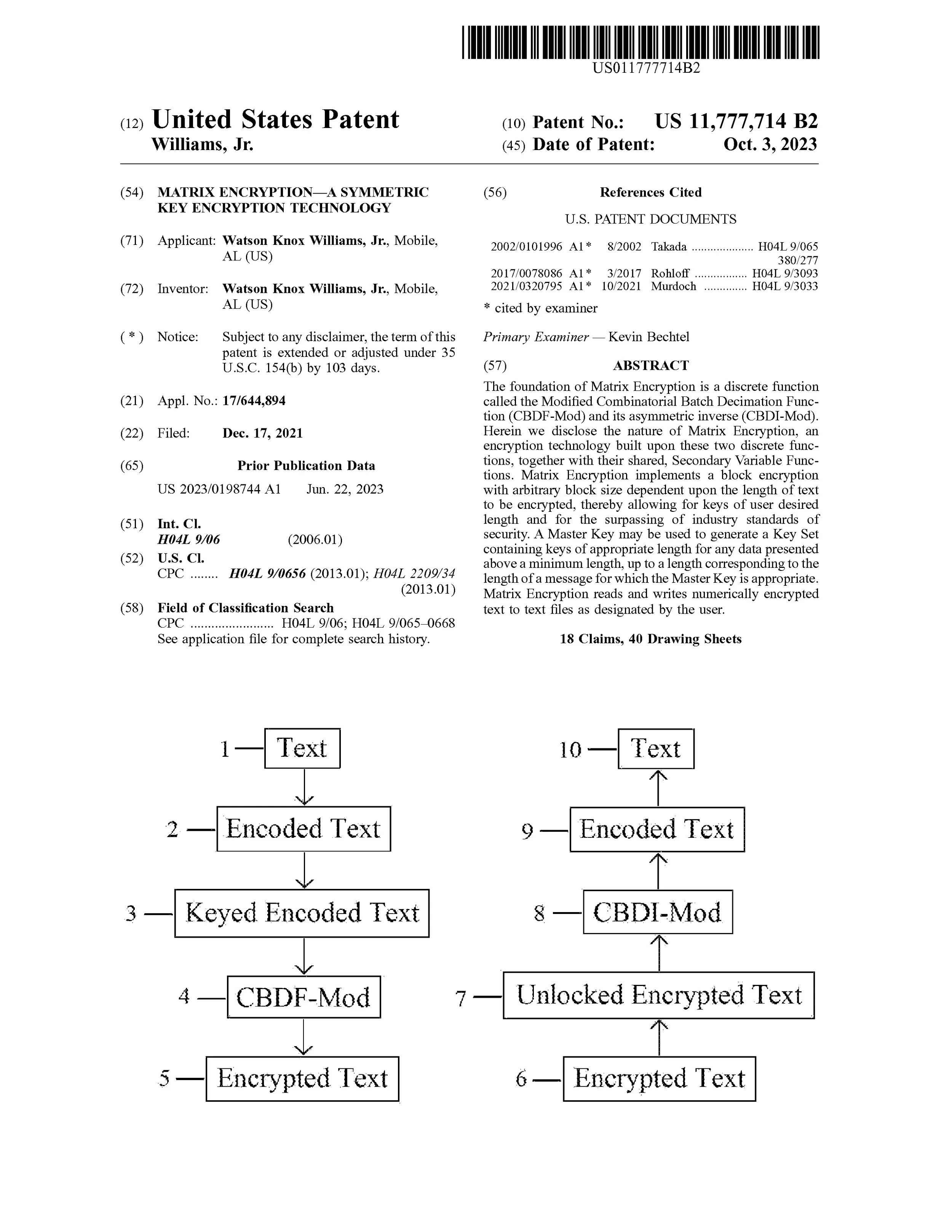
Patent Information

Inventor Highlight
Mr. Watson Knox Williams, Jr. is an independent cryptographic systems architect with a focus on sovereign infrastructure and post-quantum-resilient security models. He holds a Bachelor of Arts in Philosophy with a Minor in Mathematics from the University of South Alabama, an academic foundation that has informed both the conceptual rigor and mathematical depth underlying his inventive work

Social Media
Follow us in real time! Stay connected.
“There’s a way to do it better—find it”